THE LAKE DISTRICT, a Jewel in the British Crown
- Speaker: Hélène Jasmin
- When: Thursday, May 16, 2019, 7:30 p.m. to 9 p.m.
- Where: Centennial Hall,
- 288 boul. Beaconsfield, Beaconsfield, H9W 4A4
Lecture in English, followed by a bilingual question period
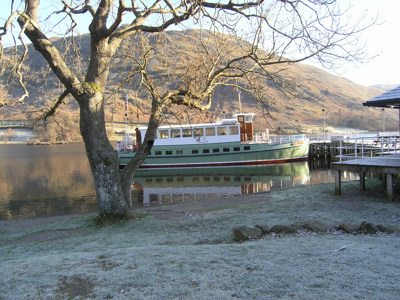 Join us on our travels through fabulous natural sites and recall tales and stories of the magnificent Lake District in North-West Britain.
This area counts 19 lakes and about 200 summits and valleys. So many things to catch our eyes in Lake District, so many pages of history: intriguing stone alignments associated with Druid gatherings, churches built in the 12th century, unique landscapes and wilderness camping, and walking routes still very popular today.
This beautiful region, which enchanted author and illustrator Beatrix Potter, poet William Wordsworth, artist and designer John Ruskin, and even Hercule Poirot, main character of Agatha Christie, traveling to Keswick to solve a case, dazzles us again and again.
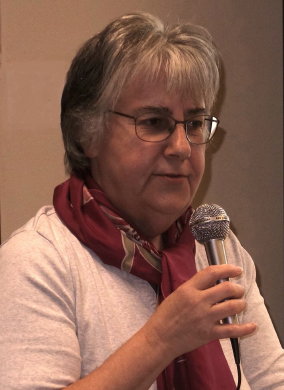
Hélène Jasmin, author and speaker, was educated at UQAM in Sociology; at École de radio-télévision Pierre Dufault in Montréal; and Violin private class with Master Eugène Bastien, member of MSO.
Her professional experience includes: freelance journalist for The Canadian Composer, The Medical Journal…; freelance radio program host, Radio-Canada FM, Montréal; assistant curator for the exhibits:
Ima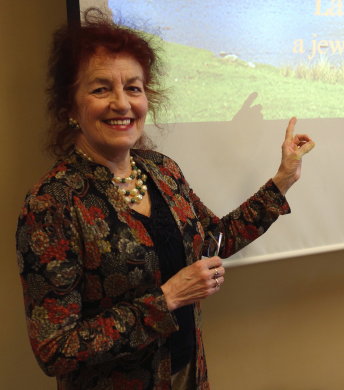 ges d’hier -- Saint-Laurent a 100 ans;
Génie en vol -- les 50 ans de Canadair-Bombardier (1994);
L’instinct du théâtre (60th anniversary of Les Compagnons), with Lorraine Pintal, director of TNM (1997).
She published:
Topics: THEATER
Les Compagnons de saint Laurent – une petite histoire (éditions Leméac, 1986)
Père Émile Legault, homme de foi et de parole (Lidec éditeur, 2000)
Topics: ART & ENVIRONMENT
Frédéric Back – La capacité d’enchanter (Lidec éditeur, 2015)
Elsie Reford, la grande dame des jardins de Métis (Lidec, 2015)
Topics: ART, GARDENING & HISTORY
A Journey with Elsie – Book of Days (La Belle Amérique publisher, 2018)
================================================
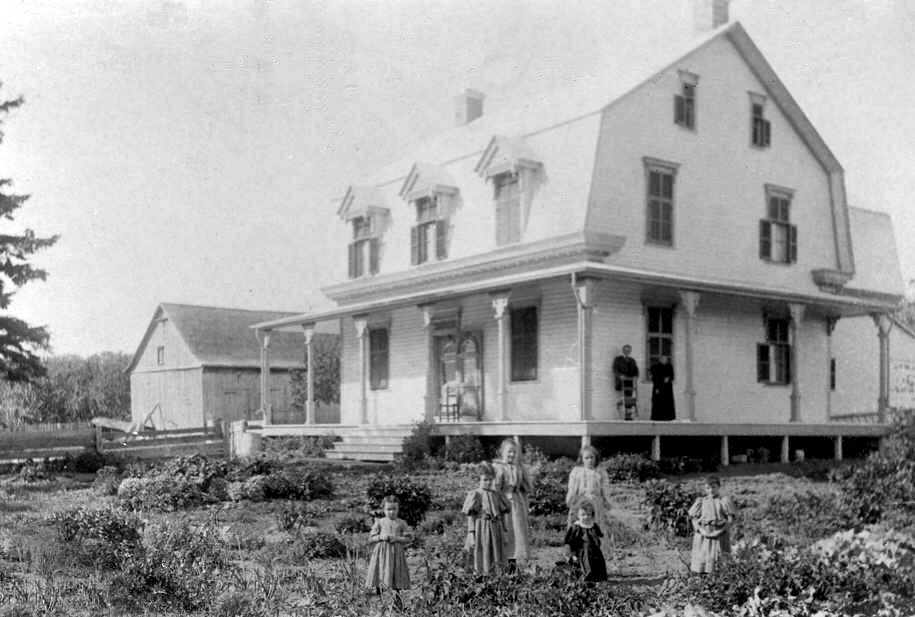 Pauline Faguy-Girard introduces us to some of the old farm houses of Beaconsfield which are still standing. Some are almost identical to their original construction; others have been modified through time to suit the needs of the different owners. We will discover the buildings and some of the people who lived in these houses.
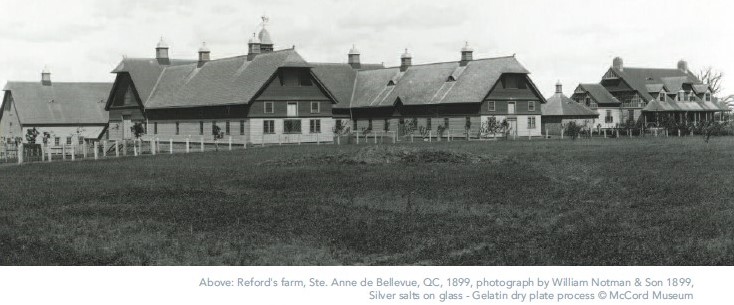
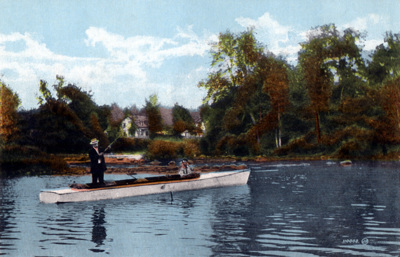 The great resorts locations of the province of Quebec became very popular in the mid 19th century with the development of railways. Wealthy businessmen and industrialists who were living in the Montreal Golden Square Mile began to stay in the country during summertime. This brought a social change for a new way of life.
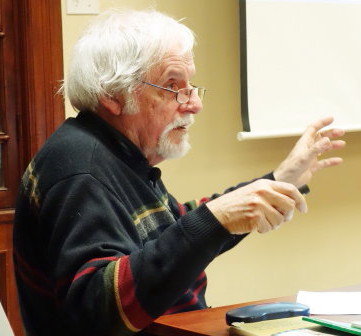 Michel Bélisle, author and lecturer, was born in Montréal. He studied Anthropology - Ethnology at Université de Montréal, and Design & Environment at UQAM. He worked as assistant-curator at McCord Museum, curator at Musée régional de Vaudreuil-Soulanges, curator at Trestler House in Vaudreuil-Dorion. He was curator for Special Exhibitions:
 Speaker: Denis Gravel
 Alexander Reford is the director of Les Jardins de Métis /
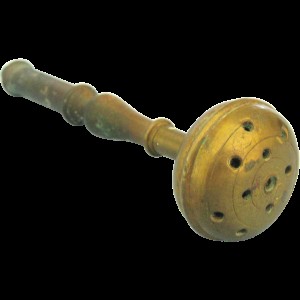 The spirit of the 18th-Century Enlightenment joined the first settlers from Europe to populate New France. Bearing this spirit, Freemasonry, organized as a Grand Lodge in London as soon as 1717 and introduced in France around 1725, settles quickly in North America. But here, it will immediately have to fight for the freedom of thought, facing an intolerant Catholic Church. The speaker will describe this journey and answer the questions that haunt everyone and that nobody dares to ask.
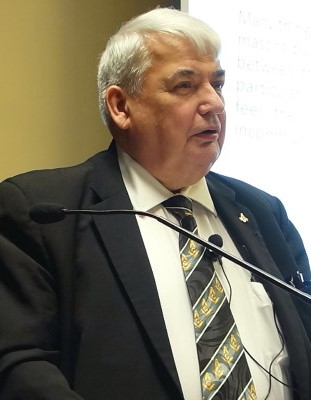 Jacques G. Ruelland, Ph.D., professor (retired), Department of Philosophy, Collège Édouard-Montpetit; Department of History, Université de Montréal; authored 48 books. In Freemasonry: 33rd Degree; PDDGM (Montreal District 4, GLQ); PGSec (GLQ); currently: GSec AASR of Canada, Valley of Montreal, and Librarian, GLQ.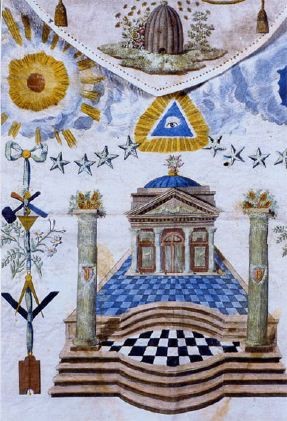
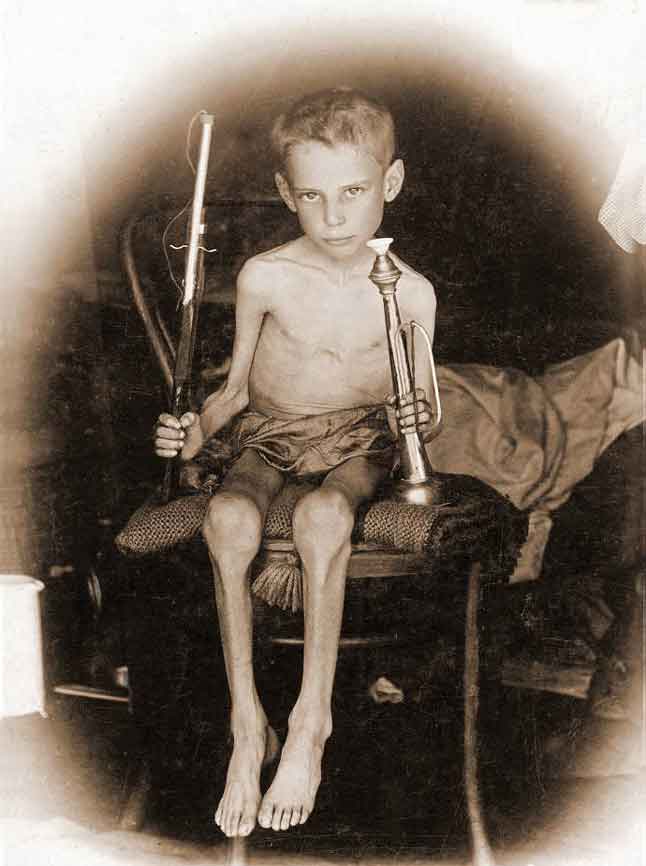 In 1899 the South African Boer War begins between the British Empire and the Boers of the Transvaal and Orange Free State. The Boers, also known as Afrikaners, were the descendants of the original Dutch settlers of southern Africa. Britain took possession of the Dutch Cape colony in 1806 during the Napoleonic wars, sparking resistance from the independence-minded Boers, who resented the Anglicization of South Africa and Britain’s anti-slavery policies. In 1833, the Boers began an exodus into African tribal territory, where they founded the republics of the Transvaal and the Orange Free State. The two new republics lived peaceably with their British neighbours until 1867, when the discovery of diamonds and gold in the region made conflict between the Boer states and Britain inevitable. Minor fighting with Britain began for the second time in the 1890s, and in October 1899 full-scale war ensued. By mid-June 1900, British forces had captured most major Boer cities and formally annexed their territories, but the Boers launched a guerrilla war that frustrated the British occupiers. Beginning in 1901, the British began a strategy of systematically searching out and destroying these guerrilla units, while herding the families of the Boer soldiers into concentration camps. By 1902, the British had crushed the Boer resistance, and on May 31 of that year the Peace of Vereeniging was signed, ending hostilities. The treaty recognized the British military administration over Transvaal and the Orange Free State and authorized a general amnesty for Boer forces. In 1910, the autonomous Union of South Africa was established by the British. It included Transvaal, the Orange Free State, the Cape of Good Hope, and Natal as provinces.
 James (Jim) Vanstone was born and raised in Windsor, Ontario. While majoring in History and Philosophy at the University of Windsor, Jim was elected President of the history society called the Lord Acton Club. Graduating with an Honours B.A. and the University’s gold medal in history Jim went to Queen’s University in Kingston, Ontario majoring in “Imperial”, now more popularly called Third World history. He obtained his M.A. (1967) and Ph.D. (1974) from Queen’s. Doing research for his Ph.D. in Southern Africa (1969-1970) Jim spent a year in Africa. Returning to Queen’s, Jim taught Imperial History for one year before going to John Abbott College in Ste. Anne de Bellevue in 1972 where he taught history for 45 years until he retired in 2017. Jim was elected member of the Academic Council of John Abbott College (1974-2017), Chairperson of the Faculty Professional Development Committee (1975-2017), on the college’s Board of Governors (1979-1985), served on the Academic Programs Coordinating Committee, as well as being involved over the years in the United Church of Canada. Jim is also member of the Board of Governors of the United Theological College of McGill University and is currently the Chair of the Montreal School of Theology of McGill University.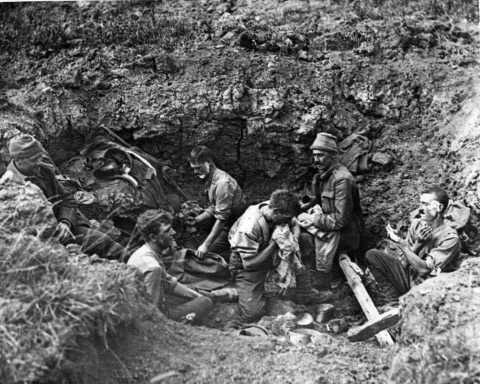
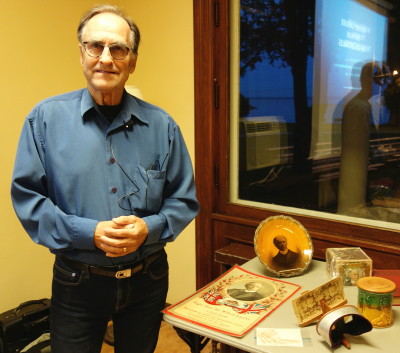
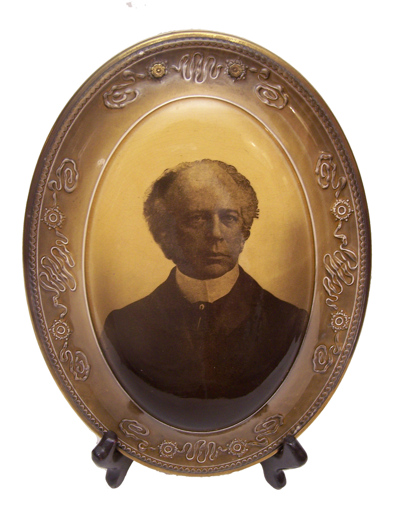
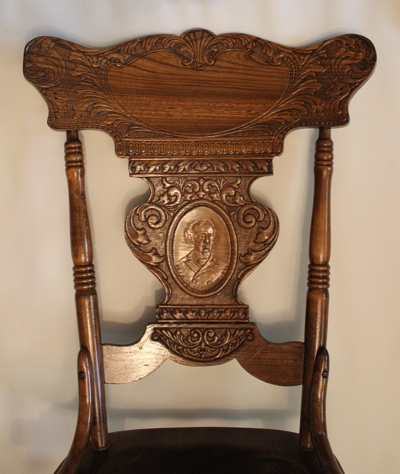
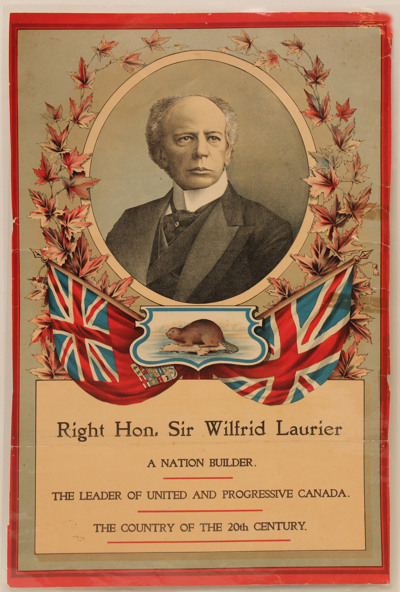 Wilfrid Laurier (1841-1919) has been leader of the Liberal Party of Canada for over 30 years and Prime Minister of Canada for 15 consecutive years (1896-1911). Very popular during his lifetime as well as after his death, Laurier remains one of the most admired Canadian statesmen. Not surprisingly, there are more memorabilia (collectables) related to Laurier than to the other Prime Ministers all together. This lecture will describe some Laurier collectables: painting, photographs, furniture, ceramic plates, glassware, tobacco items, books and so forth, connecting them to special events in the life of Laurier.